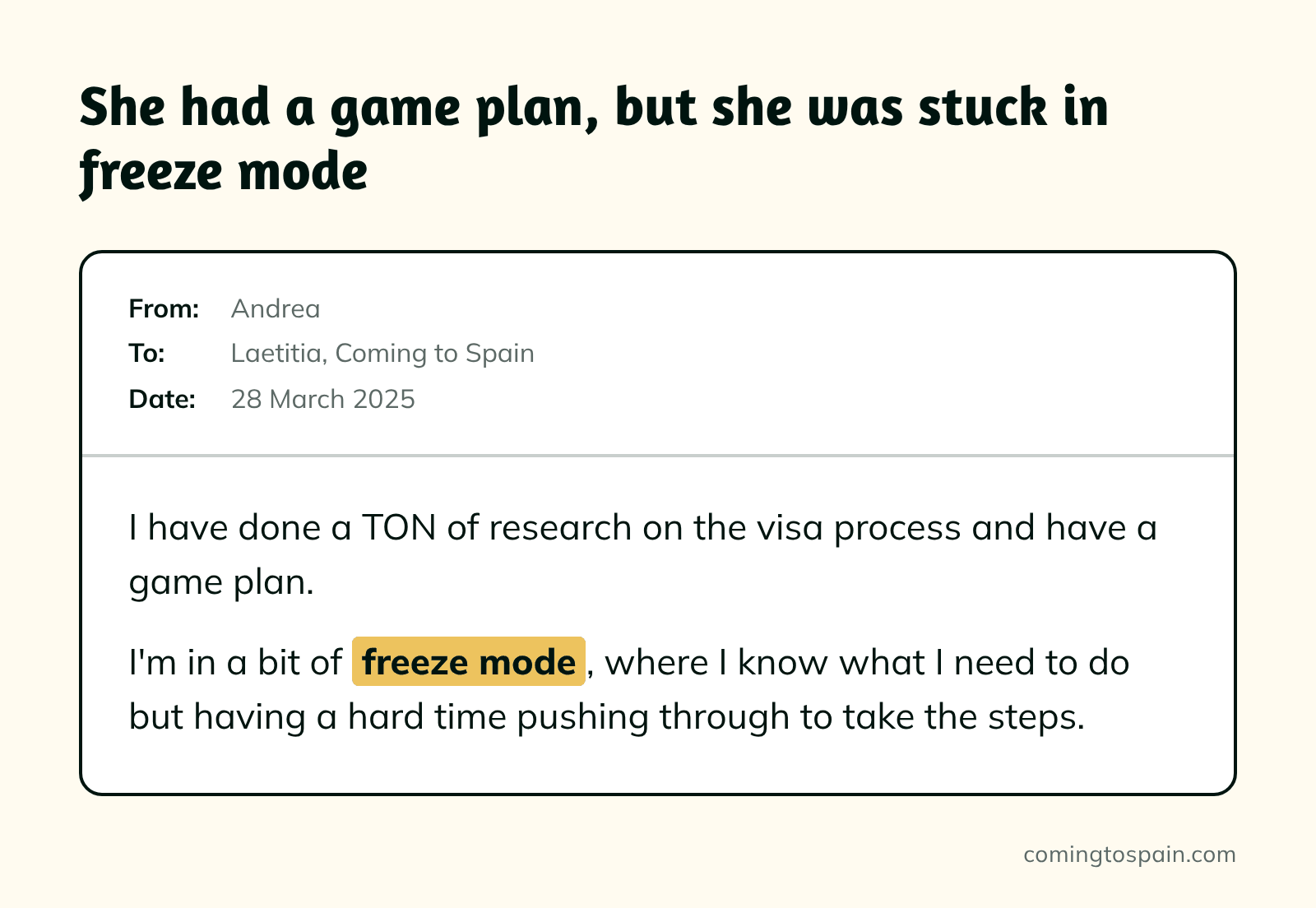
On March 28, 2025, I got an email from a woman in Phoenix, Arizona. She had done a ton of research on the visa process and had a game plan. Then she wrote that she was "in a bit of freeze mode."
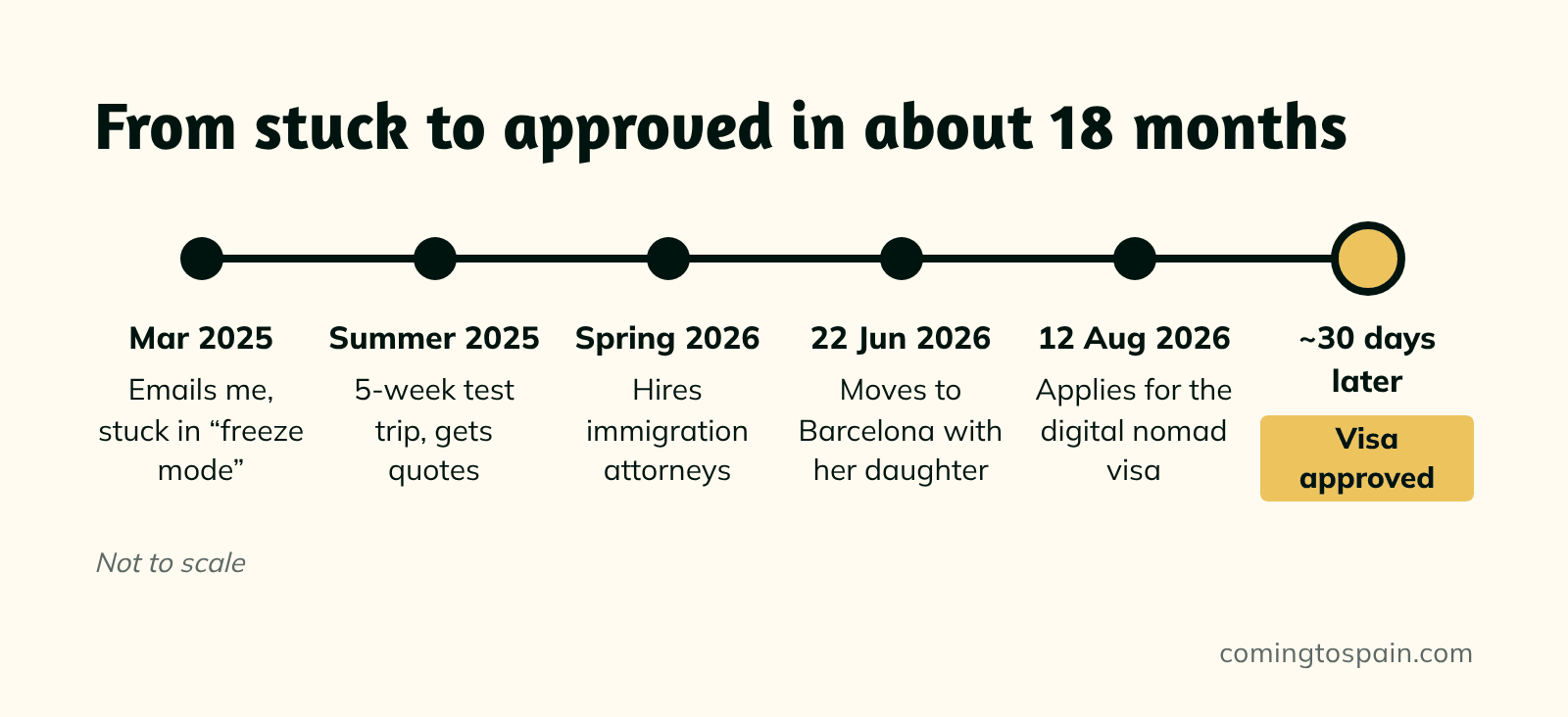
That was Andrea. She runs her own international tax practice, she's a single mom, and she wanted to move to Spain with her 10-year-old daughter. On June 22, 2026, she landed in Barcelona. Her digital nomad visa was approved about 30 days after she applied.
I sat down with Andrea in Barcelona to talk about what held her back, how she got her visa, and what her first months in Spain have really been like. You can watch the full interview below, or read on for the highlights.
In short
Andrea researched Spain for over a year before taking the first step. A five-week trial trip helped her decide.
She applied for the digital nomad visa from inside Spain to get a 3-year residence permit instead of a 1-year visa.
Getting her documents apostilled and translated after arriving took almost two months. She'd do it before leaving next time.
Her visa came through in about 30 days. Her daughter's, as a dependent, was still pending a month later.
Healthcare was her biggest surprise: a year of private insurance cost about what two months cost her in the US.
What does "freeze mode" feel like?
For Andrea, it meant knowing exactly what to do but not being able to start. She had spent over a year reading the visa requirements. What stopped her was the fear of making the wrong decision.
"Just to take the first step felt scary."
She told me she wasn't looking for more information when she emailed me. She wanted someone to take that first step with her. I hear this from so many people: the research is done, but saying "yes, I'm doing this" is the hard part.
What helped Andrea finally move?
She took it in small steps.
A trial trip. In summer 2025, she spent five weeks in Spain with her daughter. It was a holiday, but also a test.
Quotes, then time to think. During that trip she spoke to immigration attorneys and relocation specialists and collected fee quotes. Then she went home and gave herself time.
A clear moment to act. Back in Phoenix, she missed Spain more than she expected. By spring 2026 she was ready and hired the immigration attorneys.
Andrea had just turned 46. Her reasoning was simple: if it turned out to be a mistake, at least she would know. If she didn't go, she would never know.
Should you get help with the digital nomad visa?
Andrea's first real step was hiring an immigration attorney I referred her to, and she's glad she did. As she put it, you can research the rules all you want, but applying means dealing with the inner workings of another government.
The attorneys also confirmed she met all the criteria before she applied, which took away a big source of worry.
Want an expert to check you qualify before you apply? I can connect you with the vetted immigration attorneys I trust with my own clients.
Why apply for the digital nomad visa from inside Spain?
Andrea applied from Barcelona because it gets you a longer permit. As a business owner, she qualified as a freelancer under the digital nomad visa.
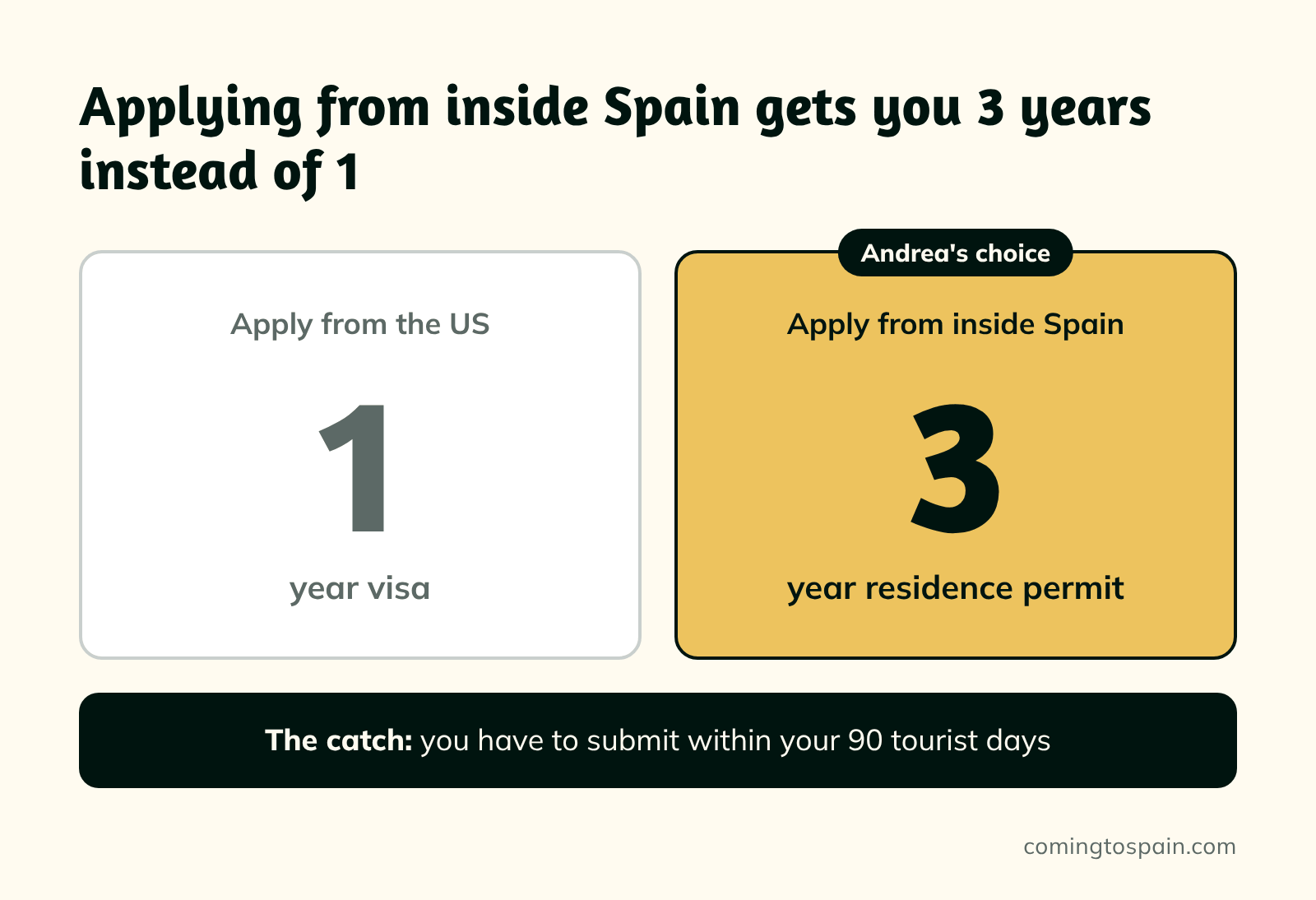
Andrea wants to stay long term, so the 3-year route made sense. The catch: you enter as a tourist, so you need to submit your application within your 90 tourist days. For the full requirements and income thresholds, read my complete guide to Spain's digital nomad visa.
Which documents need apostilles, and when should you get them?
Andrea gathered her documents after arriving in Spain. She wouldn't do it that way again.
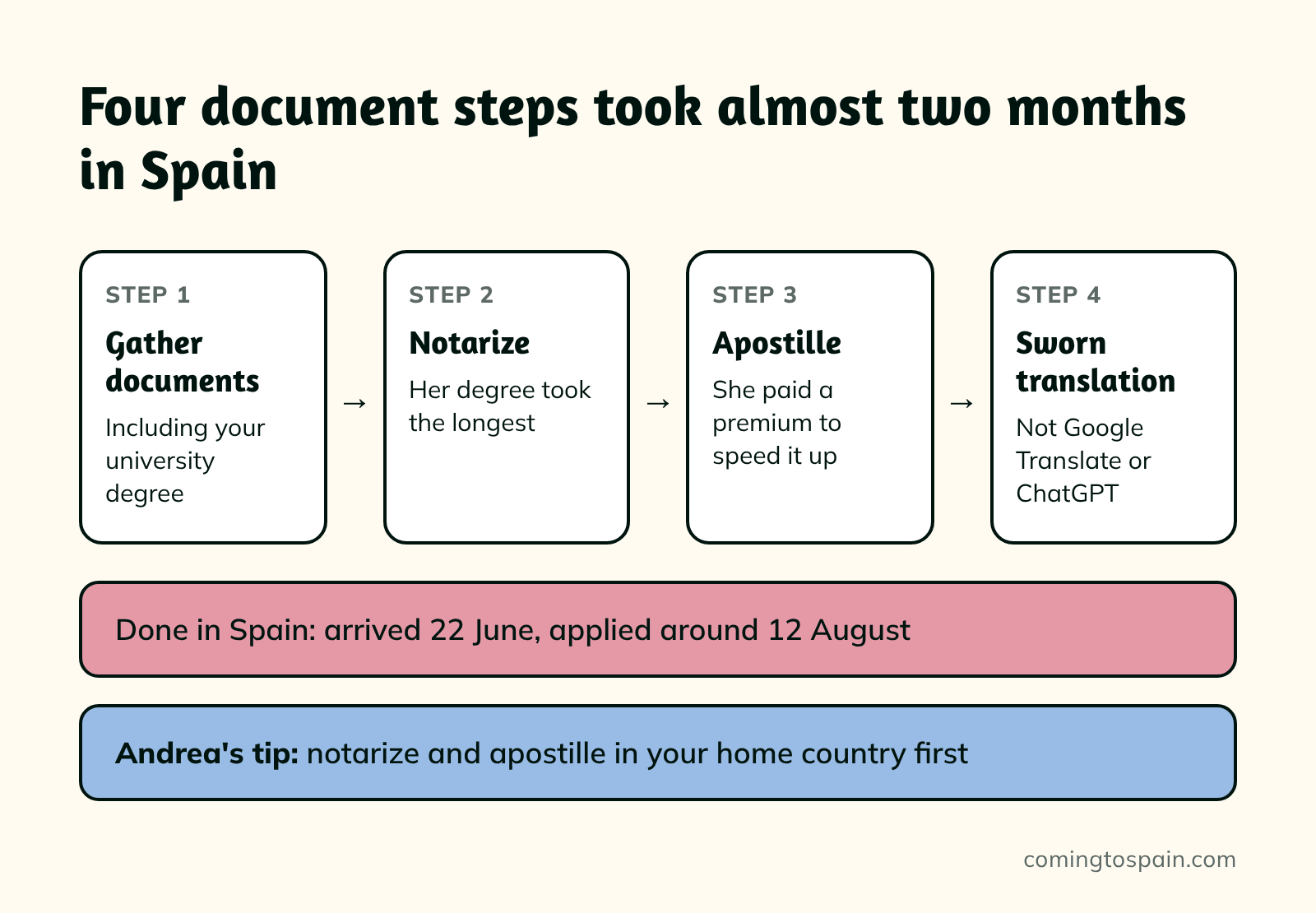
The apostilles alone took about six weeks, even with an expediting service. Her attorneys handled the sworn translations.
She arrived on June 22 and submitted her application around August 12. That's almost two months of her 90 days spent on paperwork.
"If I could go back, I would get the notarizing and the apostille done in your home country before coming here."
Learn from Andrea and get your apostilles and sworn translations sorted before you leave. My trusted partners offer exclusive discounts for Coming to Spain readers.
How long does the digital nomad visa take?
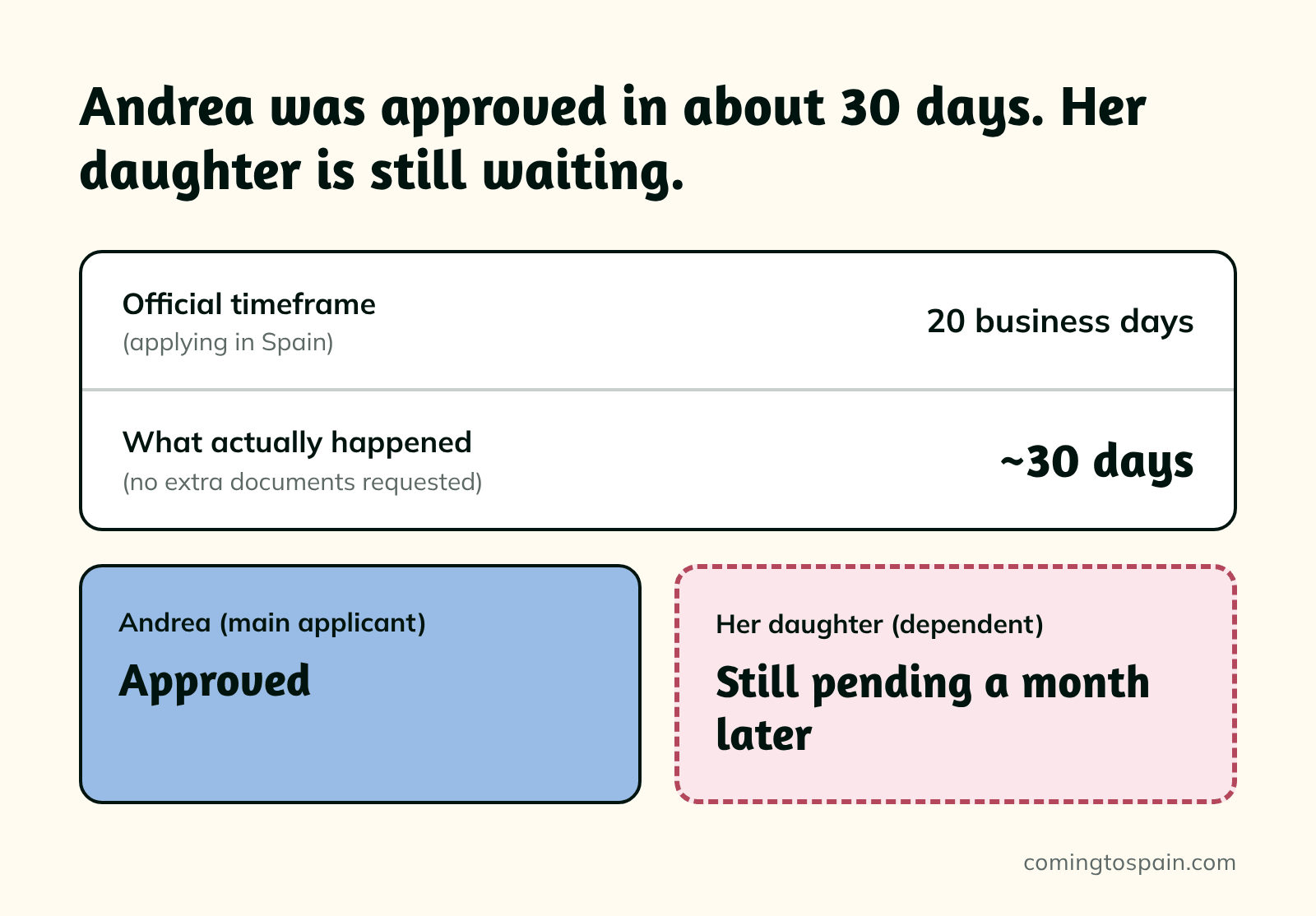
The official timeframe for applications made in Spain is 20 business days. Andrea's took about 30 days, with no request for extra documents. A friend from Phoenix who applied a month earlier had the same experience.
What happens to a dependent's application?
Andrea applied as the main applicant with her daughter as her dependent, so she submitted documents for both. Her visa was approved at around 30 days. A month later, her daughter's still hadn't come through.
Her attorneys told her that, because of backlogs, main applicants are being approved first and family members are taking longer. It hasn't affected school. But Andrea can't start her daughter's TIE yet, so she's not travelling outside Spain until it's sorted.
What comes after your visa is approved?
Approval is not the end of the paperwork. Andrea's order of steps:
NIE: she received it with her approval.
Padrón (empadronamiento): registering your address at the local town hall. When we filmed, her appointment was booked for about a week and a half later.
TIE: her physical residence card, which comes after the padrón.
The padrón matters more than people expect. It unlocks access to many things, including public healthcare.
Andrea's law firm offered a package covering the steps after approval, including booking appointments, which are hard to get. She chose it and says it made a stressful process much easier.
How hard is it to find housing in Barcelona?
Harder than Andrea imagined, and she already knew about the housing crisis. Her plan was a long-term rental, but it wasn't possible. She was also searching in August, which is the worst month. Her lessons:
Avoid searching in August, when much of the city is away.
A temporary rental is a good first step. She chose the city centre for easy access to everything, and to learn the city before choosing a neighbourhood long term.
Get padrón registration written into your lease. Some short-term contracts forbid registering at the address, which leaves you stuck. Andrea asked for it to be explicit. Her landlord said the final decision was the town hall's, and Andrea replied that it couldn't hurt to put it in writing.
Looking for a place in Barcelona? A property-search expert can help you find a rental that lets you register on the padrón.
Is Barcelona cheaper than Phoenix?
Not at first. Andrea says the upfront cost of moving is high: rental deposits, attorneys, flights, and private health insurance paid for the full year in advance. After that, the picture changes.
| Cost | Andrea's experience in Barcelona vs Phoenix |
|---|---|
| Moving costs | High upfront investment |
| Rent | Not much different, and can be high |
| Health insurance | A year of premiums for about the price of 2 months in the US |
| Food | Better quality and noticeably cheaper |
| Energy | Her bill is significantly lower |
| Transport | No car payment or car insurance |
Andrea is also clear that she's empathetic to locals, who feel the high housing costs too.
How does healthcare in Spain compare to the US?
This was Andrea's biggest shock. She chose private insurance, and she can get an appointment quickly. At her first doctor's visit, the doctor took time to understand what she needed and ordered thorough blood work she had to fight for in the US.
"I almost cried at my first appointment with a doctor."
She knew all this intellectually before moving. Experiencing it has become one of the reasons she wants to stay.
Comparing health insurance for your visa? Start with my picks for the best health insurance for the digital nomad visa. Moving with kids? Read my guide to the best health insurance for expat families in Spain.
Do you need a car in Barcelona?
Andrea sold her car before she left and has no plans to buy one. In Phoenix, she says, you have to drive. Here she walks and takes the metro, which she finds easy and clean. The buses can get crowded.
How hot is Barcelona in summer?
It's a different heat from Arizona. Phoenix is dry and extreme, while Barcelona is humid. Andrea spent her first August in the city and now understands why locals leave. Next summer, she plans to escape to the mountains or the coast.
How do you choose a school in Barcelona for an American child?
The school question was a big part of Andrea's freeze. Her daughter loved her school and friends in Phoenix, and Andrea knew the move would be a hard transition.
Her daughter didn't speak Spanish or Catalan. Andrea chose a private international school where lessons are mainly in English, with Spanish and Catalan classes. Students come from Spain, Catalonia, the rest of Europe, the UK and the US. Her daughter made a few friends in her first week.
Andrea's point is that it depends on the child. Another American mom she met put her kids in public school, and they picked up Spanish quickly and are doing great. Andrea knew her daughter would benefit from extra time and support, so the international route fit her best.
If you're in freeze mode right now
Andrea's story shows you don't need to feel ready. You need one small step, and support for the next one. For her, that support came from attorneys, from a friend a month ahead of her in the process, and from other people who had made the same move. She found that camaraderie made the excitement and the fear easier to carry.
Failure isn't the worst outcome. Regret is.
Want help with your visa, taxes, insurance or housing? Talk to one of my vetted experts.
Have a question about your own move? Get in touch with me.
FAQ
Can you apply for the Spanish digital nomad visa from inside Spain?
Yes. You can apply from Spain while you're there as a tourist, within your 90 days. Andrea did this to get a 3-year residence permit instead of the 1-year visa you get applying from the US.
How long did Andrea's digital nomad visa take?
About 30 days from submission to approval. The official timeframe for applications in Spain is 20 business days.
Can you bring your child on the digital nomad visa?
Yes, as a dependent on your application. In Andrea's case, her daughter's approval was still pending a month after her own, which her attorneys put down to backlogs.
Should you apostille documents before moving to Spain?
Andrea recommends it. Doing it after she arrived took about six weeks and used up almost two months of her 90 days before she could apply.